



Lou Bachrodt Chevrolet Pompano Beach – Which three-row SUV makes highway drives easier around Sunrise, FL — 2026 Chevrolet Traverse or 2026 Honda Pilot?
When parents and commuters ask which SUV reduces effort on long stretches of I-95 or the Sawgrass, the conversation quickly narrows to driver-assist tech, in-cabin usability, and how quickly an SUV adapts to everyday changes. In that light, comparing the 2026 Chevrolet Traverse and 2026 Honda Pilot becomes a study in what makes miles feel lighter. One clear difference: Traverse offers available Super Cruise® hands-free driver assistance on compatible roads, while Pilot does not offer a hands-free system. It’s a real advantage for confident, low-effort cruising when your route takes you past Sunrise, FL, and beyond, and it pairs with a standard 17.7-inch diagonal touch-screen and 11-inch diagonal Driver Information Center that make navigation, media, and settings more visible and intuitive. Pilot counters with the familiar Honda Sensing® suite, a 12.3-inch touch-screen, and its i-VTM4® AWD system on select trims—a well-rounded setup that many families appreciate.
Both SUVs can seat up to eight and deliver smart second-row access, but Traverse steps ahead with available power-folding second- and third-row seating on RS and High Country, which takes the hassle out of quick reconfigurations. It’s the sort of small, repeated time-saver you notice on weeknights when activities run back-to-back. Add available HD Surround Vision, a hands-free liftgate, and standard trailering equipment enabling up to 5,000 pounds of towing, and you get a vehicle that’s ready for errand loops, weekend boat ramps, and pick-up/drop-off lines with equal ease. Honda Pilot brings strengths too, like a TrailSport trim with extra ground clearance, steel skid plates, and a multiview camera system—excellent for light exploration and tight parking. The difference is that Traverse makes those same day-to-day transitions feel a bit smoother, thanks to broader screen real estate, power-folding seats, and hands-free capability.
If you’re deciding based on highway confidence, the case for Traverse is straightforward. Super Cruise® enables hands-free driving on hundreds of thousands of miles of compatible roads across the U.S. and Canada, including major Florida corridors. You still supervise—there’s a Driver Attention System to ensure you remain engaged—but the system takes on the steady-state steering and speed adjustments so you can relax your grip. Honda’s Adaptive Cruise Control with Low-Speed Follow and Lane Keeping Assist can help reduce effort, yet still requires constant steering input; for daily highway commuters, that’s the distinction that matters most.
Inside, the way you interact with your SUV also affects fatigue levels. Traverse’s 17.7-inch screen and 11-inch driver display reduce menu-hopping and make maps, guidance, and status readouts feel more legible at a glance. With Google built-in compatibility, voice prompts, and preferred apps are intuitive to access. Pilot brings Google built-in as well, with a clean interface on a 12.3-inch screen, but Chevy’s extra screen real estate and driver display give it the ergonomic edge on busy days when you’re managing multiple prompts and passengers. The available power-folding second- and third-row seats further minimize friction when swapping between people and gear.
- Hands-free difference: Traverse offers available Super Cruise®; Pilot relies on traditional lane-centering and adaptive cruise that still require active steering.
- Display visibility and control: Traverse’s standard 17.7-inch touch-screen and 11-inch driver display make information easier to manage; Pilot’s 12.3-inch screen is solid but smaller.
- Low-effort flexibility: Traverse RS and High Country add power-folding second- and third-row seating; Pilot offers simple access but not power-folding for both rows.
Power and traction are part of the comfort story, too. Traverse’s turbocharged 2.5L engine (328 horsepower and 326 lb-ft of torque) pairs with an 8-speed automatic for confident merges, relaxed passing, and easy trailering. Z71’s Advanced Twin-Clutch AWD System helps manage traction across the rear axle, improving stability as weather or surfaces change. Pilot’s V-6 and 10-speed automatic deliver smooth, predictable power, and its i-VTM4® AWD is capable in changing conditions. On the road, though, the turbocharged torque and twin-clutch traction give Traverse a composed, confident feel that shines during family trips and multi-stop errands.
- Test the commute route: Drive your usual highway stretch to feel how the steering assist behaves and how the SUV tracks in light crosswinds.
- Gauge screen ergonomics: Explore navigation, phone, and audio on both vehicles to see how quickly you can complete common tasks by voice and touch.
- Reconfigure the interior: Fold, slide, and reset the second and third rows to compare how easily each SUV adapts to car seats, strollers, or sports bags.
- Practice parking and trailering: Try the available 360-degree camera systems and attach a light trailer if you tow—note the visibility and guidance aids.
If your decision turns on how relaxing highway time can be, Traverse presents the clearest advantage with available Super Cruise®. When you add in the larger screens and power-fold flexibility, Chevy’s three-row simply asks less of you day to day. That’s the factor our team emphasizes for regular commuters and busy families who value calm over the course of the week.
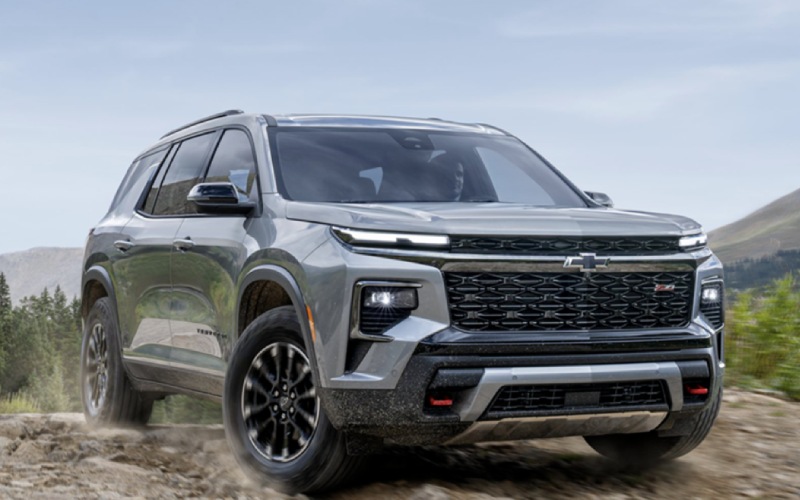
We also encourage comparing the off-pavement options. Traverse Z71 and Pilot TrailSport both add capability, from tuned suspensions to protective hardware. For paths that mix sand, ruts, and wet patches, Traverse’s twin-clutch torque transfer can make the difference in maintaining momentum without wheelspin. Pilot’s TrailWatch™ and all-terrain tires are strong allies for tricky spots and trailheads. Your best choice comes down to where you go most—and whether low-effort driving on highways or dirt paths matters more.
Ready to see the differences up close and map them to your daily life? Lou Bachrodt Chevrolet Pompano Beach can set up back-to-back drives and talk through how features like Super Cruise®, HD Surround Vision, power-fold seating, and Google built-in work in real South Florida conditions. We’re committed to clear answers that make your decision easier and more confident.
Frequently Asked Questions:
Can Super Cruise® be used on I-95 or the Turnpike?
Yes, when equipped and on compatible divided highways. Super Cruise® uses a detailed map and a Driver Attention System; always check your vehicle’s coverage map and remain attentive.
Does the Honda Pilot offer any hands-free driving?
Pilot provides a robust Honda Sensing® suite, including Adaptive Cruise Control with Low-Speed Follow and Lane Keeping Assist, but it does not offer a hands-free driver assistance system.
Which SUV adapts faster to changing passengers and cargo?
Both adapt well; Traverse RS and High Country add power-folding second- and third-row seating for quick, low-effort reconfiguration, which is especially helpful during busy weeknights and weekend errands.
We’re proudly serving Lauderhill, Delray Beach, and Sunrise with transparent comparisons and test routes that reflect your actual driving.
Request more 2026 Chevrolet Traverse information
Connect with us


