





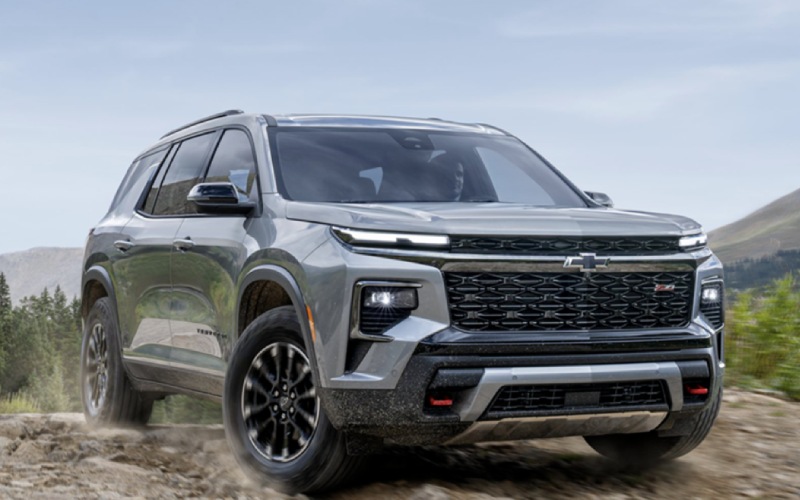
Lou Bachrodt Chevrolet Pompano Beach – 2026 Chevrolet Traverse or 2026 Ford Explorer: Which three-row SUV fits busy family life better near Deerfield Beach, FL?
Families often ask a simple question with complex layers: Which three-row SUV actually handles real-world family life better—school runs, music lessons, weekend sports, and road trips—without turning every drive into a juggling act? When you compare the latest Chevrolet three-row to its storied Ford rival, both present strong cases, but their strengths hit differently once you load people, backpacks, and strollers. This guide breaks down the key everyday advantages that matter most to parents, commuters, and caretakers who need an SUV that stays calm and capable even when the schedule is not.
Start with the interior function. The Chevy’s available seating for up to eight, best-in-class max cargo volume of 98 cu. ft., and clever One-Touch Fold second-row plus power-folding second- and third-row seating (on select trims) let you switch from kid duty to cargo mode in seconds. The Ford counters with a tidy cabin and up to 85.8 cu. ft. of cargo space, with an available 360-Degree Camera and abundant tech. However, when you need a third row that is easy to reach and fast to stow, the Chevy’s Smart Slide Seats and simple reconfiguration steps make a consistent difference on crowded school mornings and late-night pickups.
- Cabin flexibility: The Chevy’s up-to-8 seating and best-in-class 98 cu. ft. cargo capacity makes juggling kids and gear simpler.
- Screen clarity: A standard 17.7-inch color touch-screen pairs with an 11-inch Driver Information Center for easy, low-glance control.
- Hands-free help: Available Super Cruise® enables hands-free driving on compatible highways, useful for longer family trips.
- Parking confidence: Available HD Surround Vision aids tight spots; Ford’s 360-Degree Camera offers similar benefits.
- Weather-ready traction: The Chevy’s available Advanced Twin-Clutch AWD helps track cleanly through rain-slick intersections.
Technology plays a larger role than ever, especially when you need to keep everyone comfortable and the driver focused. Google built-in helps streamline navigation and voice control, while OnStar® connectivity supports features families rely on. Ford’s digital experience is polished as well, and BlueCruise brings hands-free assistance on compatible highways. Both help reduce driver fatigue; in practice, the Chevy’s big, bright displays and straightforward menus reduce distraction and shorten the learning curve. That’s particularly helpful when multiple family members share the vehicle—fewer taps, clearer prompts, and quicker habits form naturally.
Performance confidence is another family priority, whether you are pulling onto fast-moving parkways or steadying the vehicle with a full load and weekend gear. The Chevy’s turbocharged 2.5L with an 8-speed automatic emphasizes steady, decisive response, and the available Z71 tuning—with Terrain Mode, Hill Descent Control, and a twin-clutch AWD system—offers sure-footedness on wet suburban streets and uneven trailheads. Ford’s lineup balances daily comfort and performance too, and its off-road-oriented trim brings a Torsen limited-slip rear axle and underbody protection for adventurous families. Both tow up to 5,000 pounds when properly equipped, covering small boat and utility trailer needs.
Safety is the final lens parents use, and both SUVs bring robust driver assistance suites. Chevy Safety Assist, with over 20 standard features, includes Automatic Emergency Braking, Front Pedestrian and Bicycle Braking, Blind Zone Steering Assist, Rear Cross Traffic Braking, and the Safety Alert Seat. Ford Co-Pilot360® technologies are comprehensive as well, adding a calm baseline of electronic support that helps you feel more in control. In daily use, the Chevy’s emphasis on clear, layered alerts plus the confidence of available HD Surround Vision help drivers respond faster with more context around the vehicle.
If your family’s daily rhythm involves quick re-seating, tight parking, and frequent third-row use, the Chevy’s space, reconfiguration, and driver-friendly tech create a smoother experience. If you’re leaning toward adventure trails and performance flavor, the Ford’s specialized trims may appeal. The best answer blends both perspectives—test the everyday details with your family on board.
Lou Bachrodt Chevrolet Pompano Beach is here to help you compare the details that matter most, with staff who live the same busy schedules and can demonstrate features in real time, from Smart Slide Seats to hands-free driving. Our showroom is serving Deerfield Beach, Lauderhill, and Delray Beach with thoughtful, pressure-free guidance and routes that mirror your commute, school stops, and weekend errands.
Frequently Asked Questions:
Can hands-free driving help with long family trips?
Yes. Super Cruise® and Ford BlueCruise reduce fatigue by handling acceleration, braking, and lane centering on compatible highways, while the driver stays attentive. Hands-free tech is not a substitute for safe driving, but it can make multi-hour drives feel less strenuous.
What should I check during a test drive with kids?
Bring child seats, test the Smart Slide Seats or second-row access, fold rows multiple times, and try loading bulkier items. Check camera views, visibility, and how quickly you can tap common functions on the center display.
How do I decide between off-road and street-focused trims?
Consider your weekly routes. If you frequently hit dirt roads or uneven parking areas, an off-road-oriented package with specialized traction features can add confidence. If your life is mostly pavement, street-focused trims may ride more quietly and maximize space and tech value.
Request more 2026 Chevrolet Traverse information
Connect with us


- Chevrolet Bolt
- Chevrolet Colorado
- Chevrolet Dealer
- Chevrolet Equinox
- Chevrolet Equinox EV
- Chevrolet Service
- Chevrolet Silverado 1500
- Chevrolet Silverado 2500 HD
- Chevrolet Suburban
- Chevrolet Tahoe
- Chevrolet Traverse
- Chevrolet Trax
- Finance
- Green
- New Inventory
- Pre-Owned Inventory
- Rental
- Technology
- Used Dealer